
When Cheese Looks a Little Wild — And What to Do About It
30th Apr 2026
Food Waste & Kitchen Notes
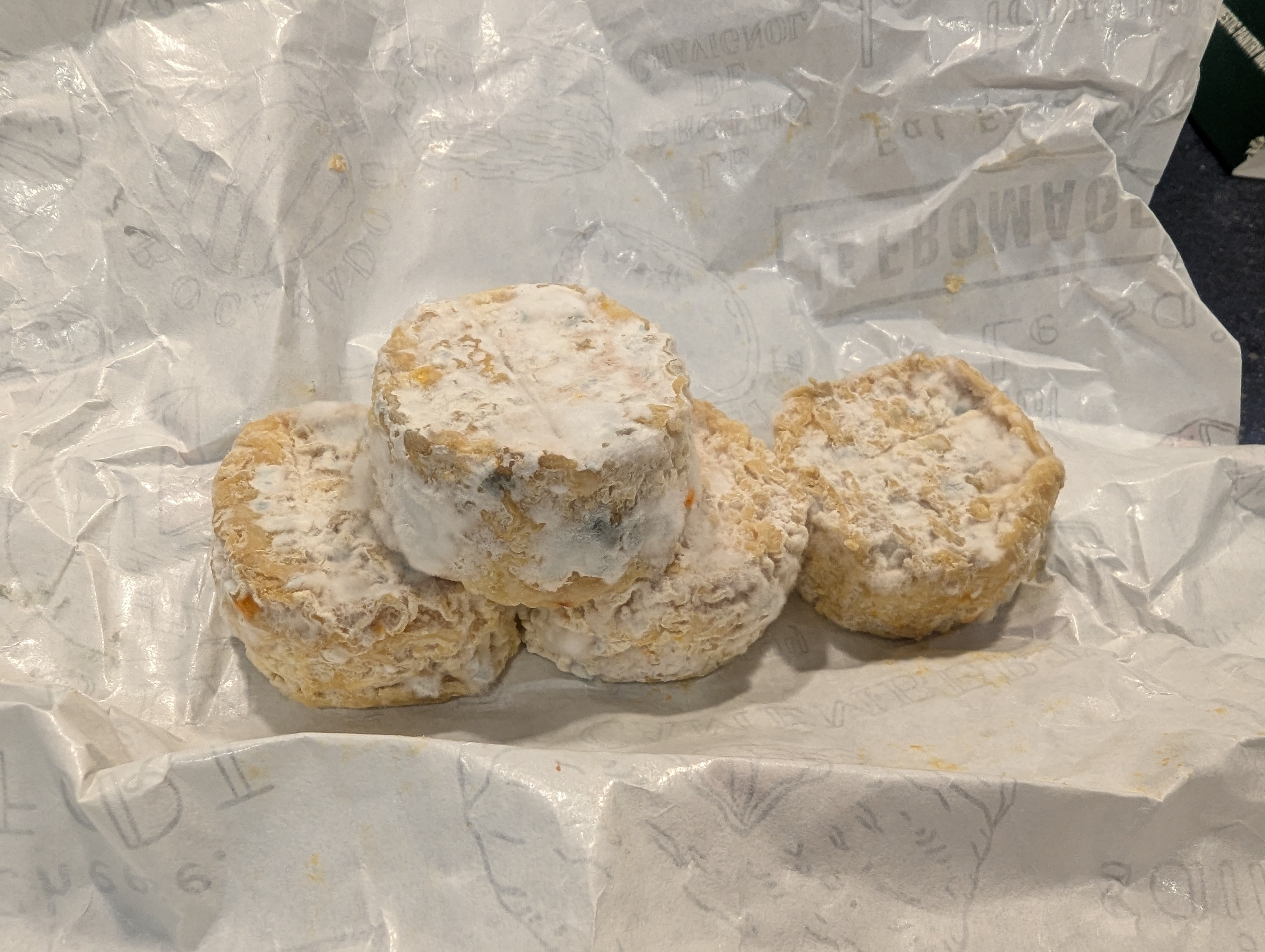
Real cheese is alive. Unlike the shelf-stable, artificially preserved products filling supermarket shelves, artisan cheese is teeming with live cultures, bacteria and natural mould — all signs of something extraordinary, not something wrong.
When you spot a little mould on a hard cheese — think Gouda, Comté, aged cheddar — the right move is to trim, not toss. Cut or scrap the mould off, rewrap in fresh cheese paper (or baking paper), and carry on. The rest is perfectly fine. In fact, cheesemakers and cheesemongers do exactly this every single day.
And for your softer cheeses — your Brie, your chèvre, your washed rinds? Remember that these cheeses are already covered in living mould and bacteria. That's not a flaw, that's the point. A little extra surface growth is simply the cheese continuing to do what it was made to do.
When You're Not Sure — Cook It
If you're ever unsure about a cheese and don't feel confident eating it as is, don't throw it away. Cook it.
A Brie that's pushed a little further than you'd like is extraordinary baked whole and served with honey and walnuts. A chèvre going strong is perfect crumbled over a tart or a pizza. A washed rind that's running a little ripe melts into a gratin or a toastie in the most spectacular way. Heat is your friend, and a cheese that might have given you pause at the table will disappear into a dish and taste completely intentional.
The only thing worse than wasted cheese is unnecessarily wasted cheese. When in doubt — cook it.
A Note on Sources
We get it — a cheese that looks like the photo above can be intimidating if you're not used to it. We work with cheese every single day, so these things are far less alarming for us than they might be for someone opening their fridge at home and finding something unexpectedly furry.
Our honest advice: when you're unsure about something you've found in your fridge, look to your cheesemonger or a specialist cheese shop for guidance before reaching for general food safety sources. Cheesemakers and cheesemongers are in constant, daily contact with these products. They understand how they age, how they behave, and what the difference is between a cheese that is thriving and one that genuinely needs to go. That context matters enormously, and it's knowledge that broad food safety guidelines — written for the widest possible audience — simply can't capture.
What We Actually Did: Caramelised Onion and Goat's Cheese Tart
The photo above is some old crottin we found at the back of our fridge. We won't pretend the visual is especially inviting — but in reality, these were nowhere near as intense as they looked. We knew they needed to be used in bulk, and eating one crottin at a time wasn't going to get us there quickly. So we made one of our all-time favourite quick meals: a caramelised onion and goat's cheese tart.
Simple, fast, satisfying, and absolutely zero waste.
The Caramelised Onions
Don't rush this part. Low and slow is the entire secret.
We caramelised just over a kilo of onions — which sounds like a lot, but they cook down dramatically and you want a generous, jammy layer on the tart.
Slice your onions and cook them in plenty of butter with the lid on over a low heat for about 15 minutes, until they're completely soft and starting to become translucent. Then add 2 teaspoons of sugar, remove the lid, and cook for another 20 minutes until all the liquid has evaporated and the onions have turned a deep, golden brown. We also added a little dried thyme — goat's cheese and thyme are one of those pairings that never gets old.
The Base
This is the part that will genuinely surprise you. No resting, no proving, no fuss.
- 250g flour
- 1 tsp salt
- 1 tsp dried yeast
- 1 tbsp herbes de Provence (optional, but worth it)
- 100ml olive oil
- 100ml water
Put everything in a bowl and mix. That's it — it comes together in about two minutes into a soft, pliable dough. Roll it out into a large rectangle that fits your baking tray, transfer it to the tray, and you're ready to go.
Assembly and Baking
Spread the caramelised onions generously and evenly over the dough, right to the edges. Because our crottin (we used about 6) were a little more developed in flavour than usual, we cut the goat's cheese into smaller pieces than we normally would — we thought it might be richer once cooked. (In the end, it wasn't as intense as we'd anticipated, and we could have been more generous. Something to note for next time.)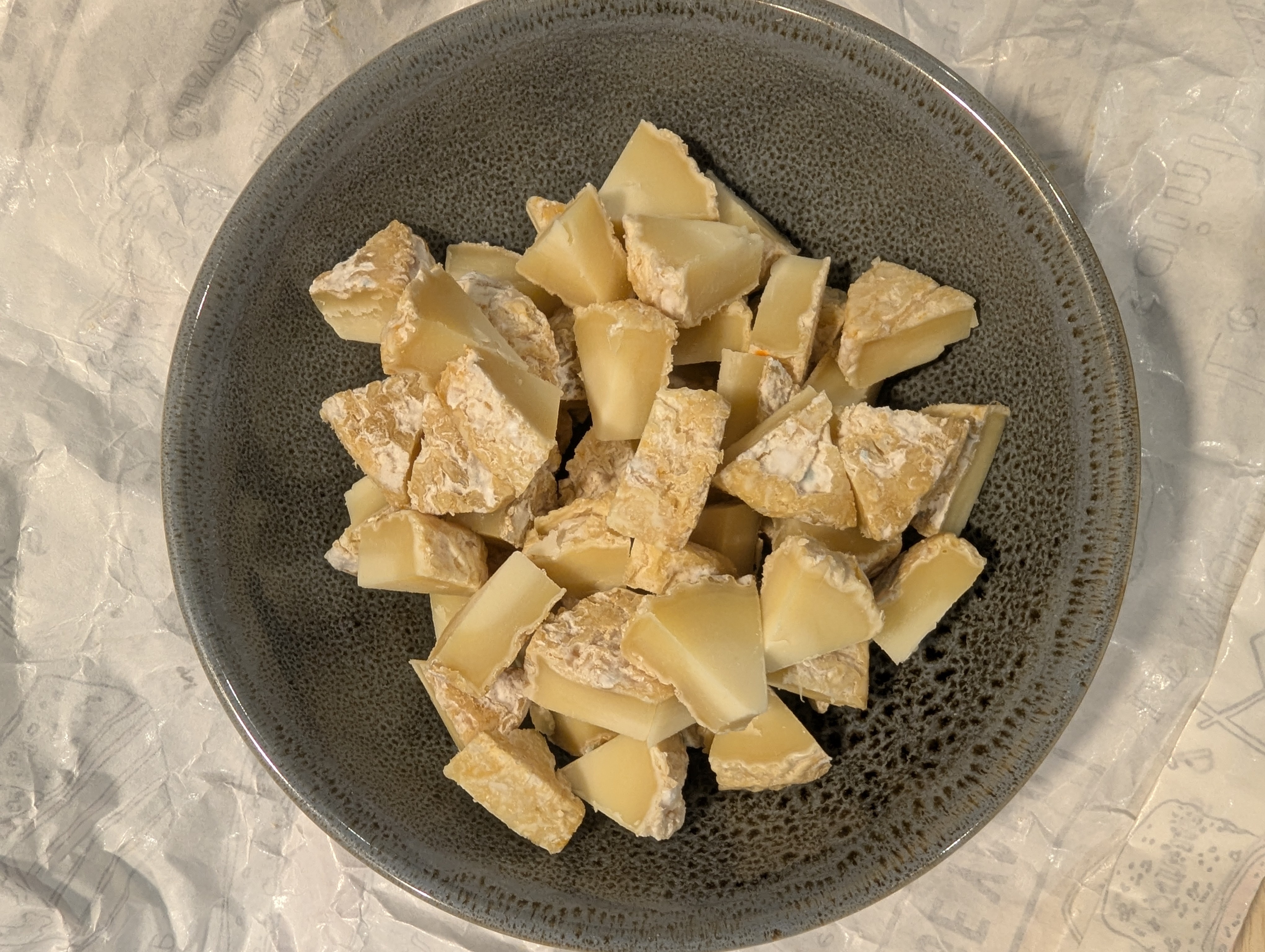
Scatter the goat's cheese all over the top of the onions. Put the tray into a hot oven and bake until the cheese is melted and toasted to your preference — some people like it just softened and barely coloured, others like it properly golden. Both are correct. If you are ever doing something like this and find it too strong, drizzle honey over the top and your meal will be beautifully balanced! 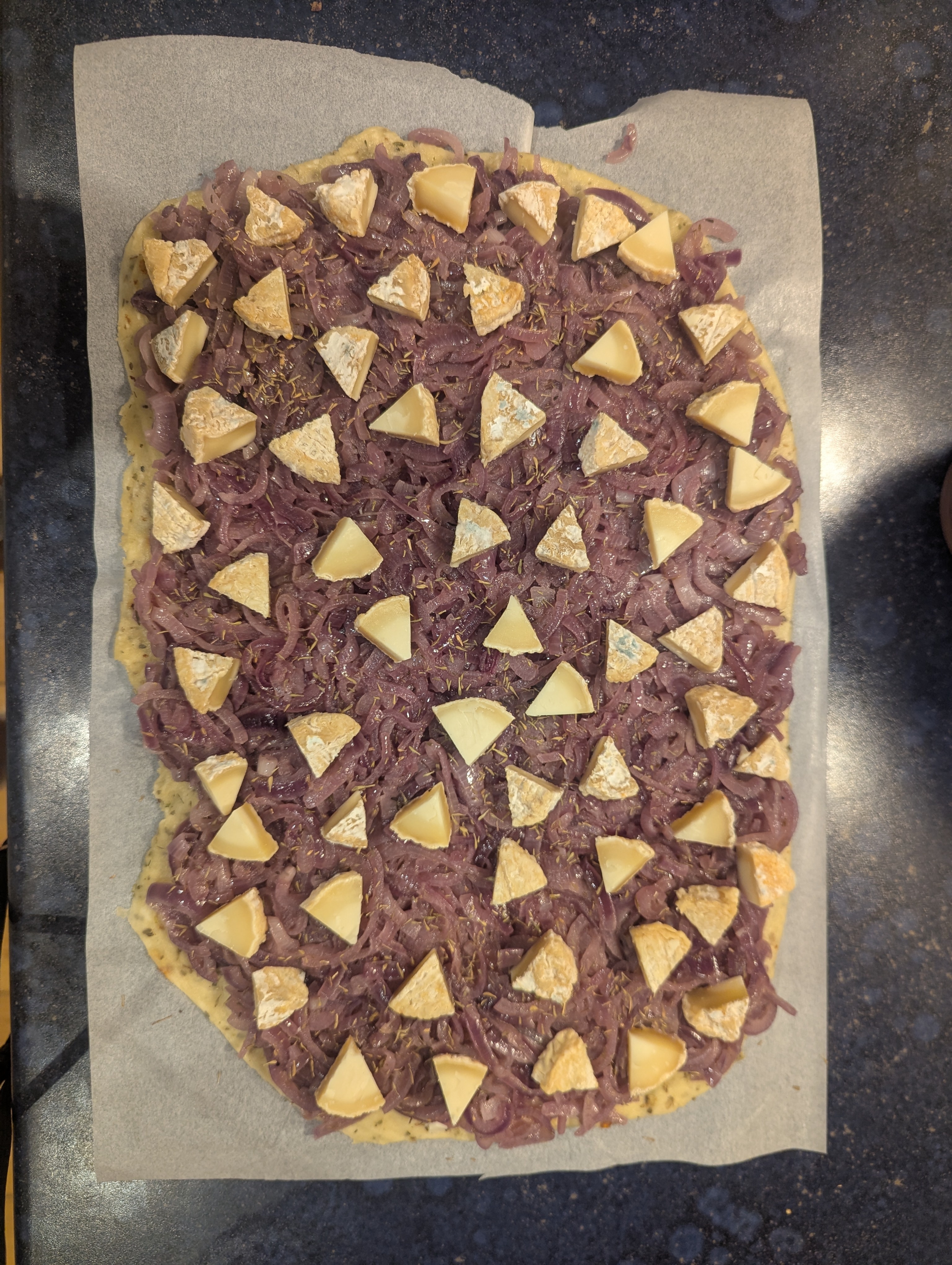
Serve with a green salad and a sharp vinaigrette on the side. The acidity cuts through the richness of the onions and cheese beautifully.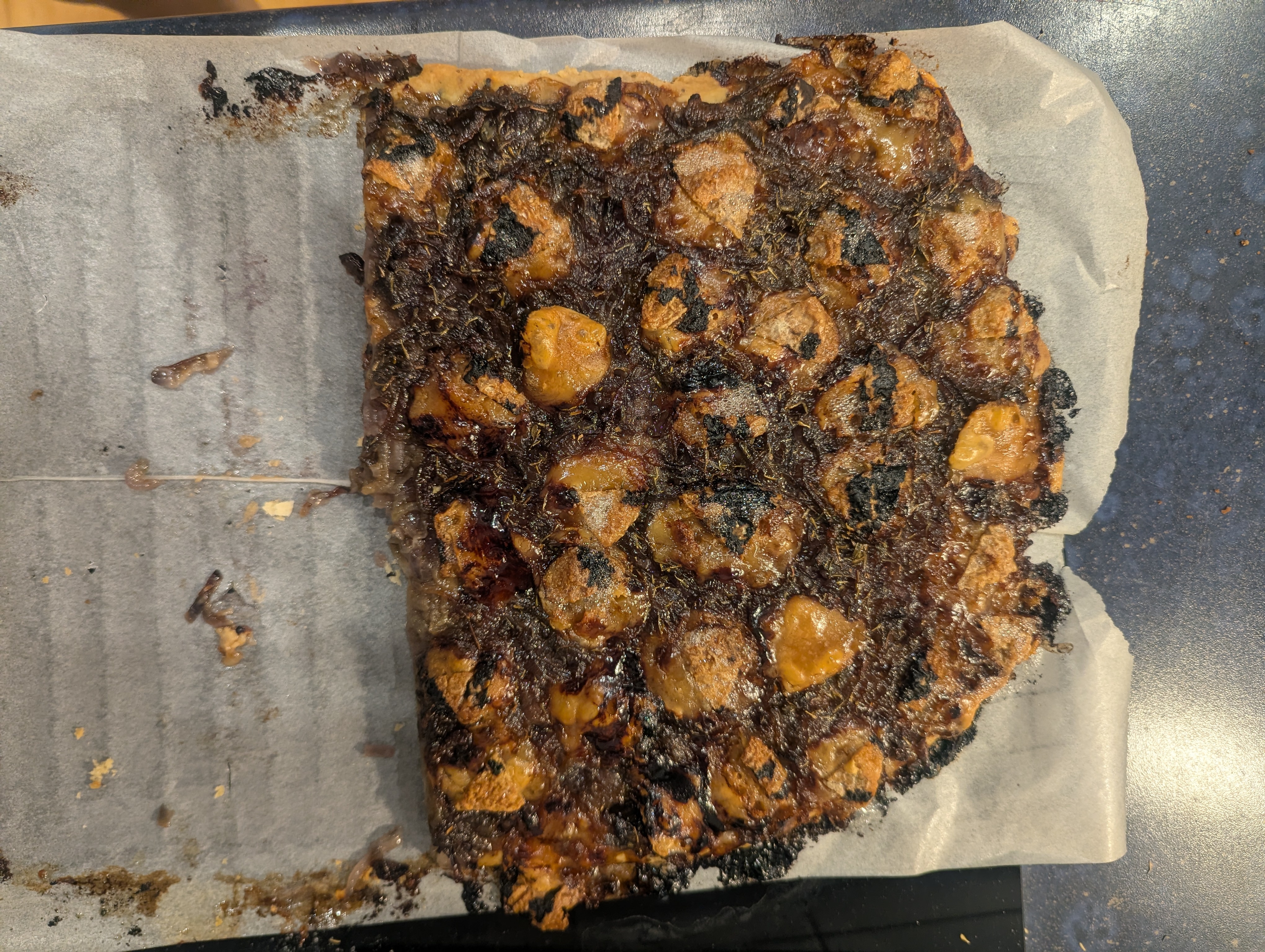
Bon appétit — simple, easy, no waste.
Have a question about a cheese you've found in your fridge? Come and see us in store or send us a message — we're always happy to help.