

Behind the Cheese | Week 11: Why are some cheeses wrapped in leaves?
18th Nov 2026
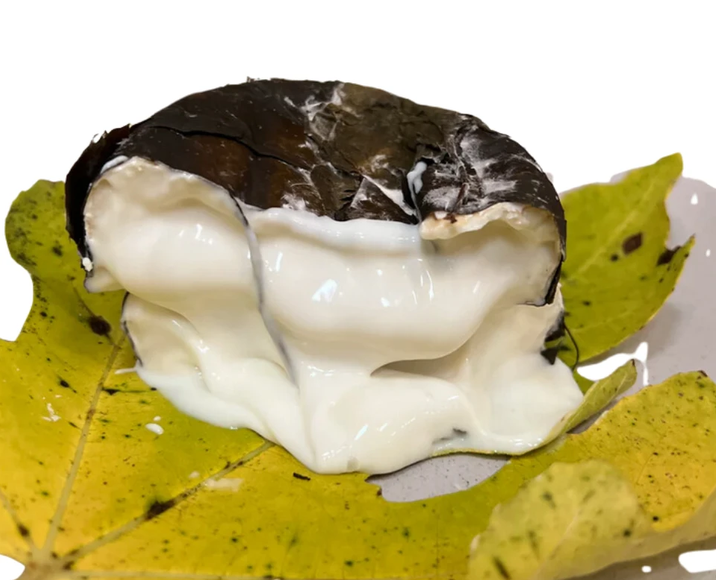
Some cheeses arrive at the counter wrapped in chestnut leaves, vine leaves or other natural coverings. At first glance, it can look purely decorative. But in many traditional cheeses, the leaves have a practical purpose too. They can help protect the cheese, reduce moisture loss, influence the rind and, in some cases, contribute subtle aromas during maturation.
So where did this tradition come from — and what exactly are the leaves doing?
Cheese wrapping began as a practical solution
Long before plastic wrap, waxed paper and modern refrigeration, cheesemakers had to rely on materials that were available locally. Leaves were abundant, flexible and easy to replace. They could be used to protect a delicate cheese during storage and transport, especially when the cheese was soft or had a fragile rind.
In some regions, leaf-wrapping became closely tied to a particular local style. Over time, what began as a practical solution became part of the identity of the cheese itself.
Leaves can help slow moisture loss
Cheese is constantly losing moisture as it ages. That is an important part of maturation, but if moisture escapes too quickly, the cheese can dry out before it has developed properly. Wrapping can help slow that process. A leaf forms a partial barrier around the cheese. It does not completely seal it, but it can reduce direct exposure to air and help create a slightly more humid micro-environment around the rind. This can be especially useful for softer cheeses that need time to ripen without becoming excessively dry.
The rind changes under the leaves
The surface of a wrapped cheese develops differently from one left fully exposed. Humidity around the rind can remain higher. Airflow is reduced. The rind may stay softer and more supple. Different yeasts, moulds and bacteria may also become established depending on the style of cheese and the way the leaves are prepared. So the wrapping can become part of the ageing environment. It is not simply sitting on top of the cheese.
Do the leaves add flavour?
Sometimes, yes — but usually in a subtle way.
Depending on the type of leaf, the way it is treated and how long the cheese is wrapped, it may contribute earthy, woody, vegetal or slightly tannic aromas. In some cheeses, the leaf is more about moisture management and protection than flavour. In others, the aroma of the wrapping becomes part of the finished character. This is another reason it is difficult to make one rule for all leaf-wrapped cheeses. Each style uses the wrapping differently.
Why chestnut leaves?
Chestnut leaves are one of the most familiar choices. They are strong enough to hold together during maturation and flexible enough to wrap around a cheese. They are often associated with small traditional cheeses from parts of France and Italy. The leaves may be softened or treated before use so that they can be folded without breaking. Once wrapped, they help protect the surface while giving the cheese its distinctive rustic appearance.
What about vine leaves?
Vine leaves are also used in some regional cheeses. Historically, this made perfect sense in wine-growing regions where grapevines were already part of the local landscape. The leaves could provide a readily available wrapping material. Again, their role may include protection, moisture management and a subtle influence on aroma. The connection between cheese and the surrounding landscape becomes very literal.
Leaves can help fragile cheeses travel
Soft cheeses can be delicate. A young cheese may have a very thin rind or a soft centre that is easily damaged. Wrapping can provide extra support. Before modern packaging, this would have been particularly useful when cheeses needed to be transported from farms to markets or from rural areas into towns. The leaf could act as a simple natural protective layer. In that sense, the wrapping was doing the job that modern packaging often does today.
Why are some leaves tied with string or raffia?
You will sometimes see cheeses wrapped in leaves and then secured with string, raffia or a small band. This helps keep the leaves firmly in place. It can also give the cheese some structural support as the paste softens. For very ripe cheeses, that extra support can be useful. Again, what looks decorative may have started as a very practical solution.
Are the leaves edible?
Sometimes, but usually, they are not intended to be eaten. The cheese itself may be perfectly edible right up to the rind, but the leaf is generally removed before serving. That said, the rind underneath may carry some of the aromas associated with the wrapping. So while you do not always eat the leaf, it can still influence the sensory experience of the cheese.
Why are some leaves dark or brown?
Fresh leaves are green, but the leaves used around cheese often look brown, reddish or almost black. That is because they have usually been dried, blanched, soaked or otherwise treated before use. These treatments make them more flexible and stable. They can also change the aroma and appearance of the leaf. By the time the cheese reaches the counter, the wrapping may look quite different from the original fresh leaf.
The wrapping can become part of the cheese’s identity
For certain cheeses, the leaf is instantly recognisable. Remove it and the cheese would still technically be cheese — but it would lose part of its traditional character. This is similar to the way some cheeses are associated with ash, cloth, bark or particular moulds. The external treatment becomes part of how we understand and recognise the style.
Leaves, bark, cloth and more
Leaves are only one of many materials traditionally used around cheese. Some cheeses are bound with spruce bark. Others are wrapped in cloth. Some are coated with ash. Each method influences the cheese differently.
Spruce bark can help hold a very soft cheese together. Cloth can protect the surface while still allowing moisture to escape. Ash can influence acidity and surface development.
Cheesemakers have always used the materials available around them to help guide maturation.
Tradition often follows geography
One of the most interesting things about leaf-wrapped cheese is how strongly it connects food to place. The plants growing around the cheesemaker became part of the production process.
Chestnut trees, grapevines, spruce forests and local herbs were not separate from cheesemaking. They were part of the same agricultural landscape. That is why traditional cheese can tell you something about more than milk. It can tell you about the environment in which it developed.
Are leaf-wrapped cheeses better?
No. The leaf is simply one tool among many. A cheese does not need leaves to be complex, traditional or exceptional. Likewise, wrapping a cheese in leaves does not automatically improve it. The effect depends on how the cheese is made, how the wrapping is used and how the cheese is matured. The leaf can contribute to the style, but it is only one part of the process.
More than decoration
It is easy to see leaf-wrapped cheese as something designed to look rustic on a cheese board. But the tradition began for practical reasons. Leaves could protect the cheese. They could slow moisture loss. They could help fragile cheeses travel. And they could influence the rind and aroma during ageing.
Over generations, those practical choices became traditions. And those traditions became part of the cheese’s identity. So next time you unwrap a cheese covered in chestnut or vine leaves, take a closer look before you throw them away. They are not just packaging. They are part of the story of how that cheese was made.