
Behind the Cheese | Week 8: How does blue cheese become blue?
29th Oct 2026
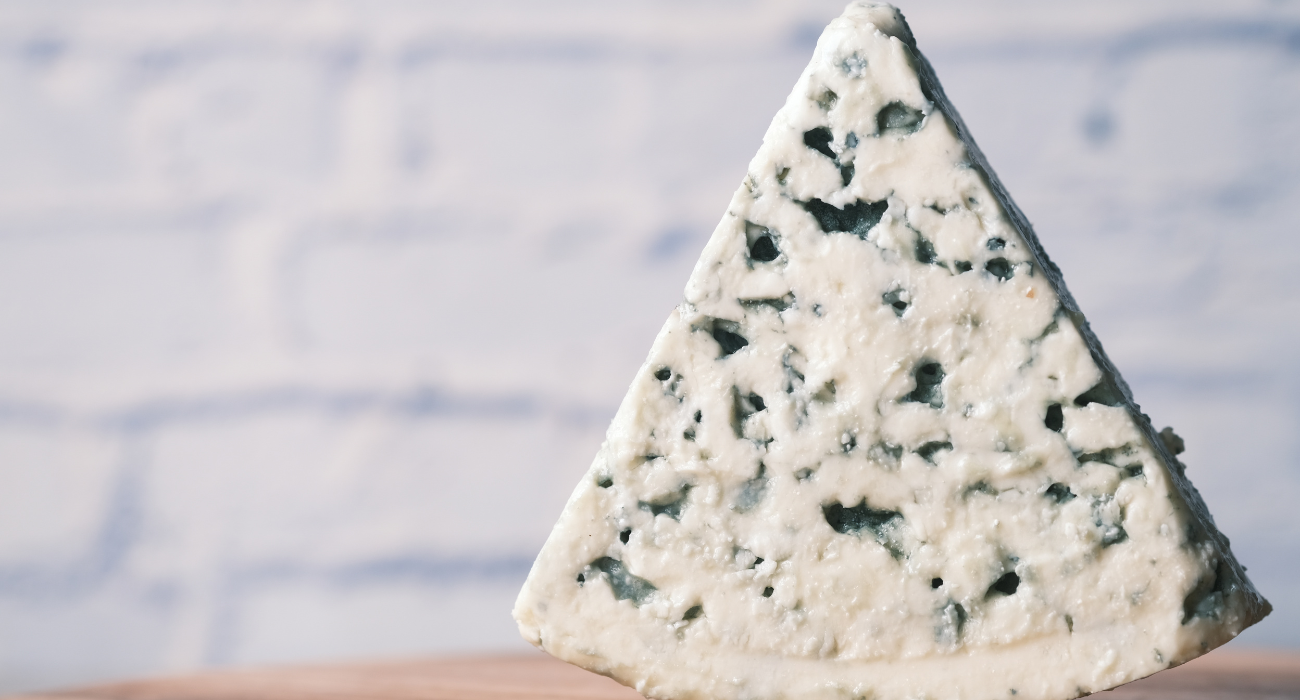
Blue cheese is one of those foods that looks completely unlike almost anything else we eat. Creamy white paste streaked with blue, green or even grey veins. Sometimes the blue is delicate and scattered. Sometimes it runs boldly through the entire cheese. But those veins do not simply appear by accident.
Blue cheese gets its characteristic colour from specific strains of Penicillium mould that are deliberately introduced during cheesemaking. The mould is only part of the story, though. For blue veining to develop properly, the cheese also needs oxygen. That is why many blue cheeses are pierced during ageing.
It starts with the mould
Most blue cheeses are made using mould cultures from the Penicillium roqueforti group. These cultures can be added to the milk or incorporated during cheesemaking. At this stage, however, the cheese may still look completely white. The mould is there, but it cannot develop strongly without access to air. And the inside of a fresh cheese contains very little oxygen. That is where piercing comes in.
Why are blue cheeses pierced?
During ageing, blue cheeses are often pierced with long stainless-steel needles. These needles create narrow channels running through the cheese. Air can then travel inside. Once oxygen reaches the mould, it begins to grow along those channels and through natural cracks and openings in the paste. Over time, blue-green veins appear. This process is sometimes called needling or piercing. Without enough oxygen, the mould cannot develop in the same way. So those dramatic blue veins are really a visible map of where air has travelled through the cheese.
Why does the blue grow in veins rather than everywhere?
Look closely at a blue cheese and you will notice that the mould usually follows cracks, holes and channels. That is because the mould grows where oxygen is available. Some blue cheeses are deliberately made with a relatively open texture. The curds may be handled in a way that leaves small spaces between them. Those spaces create pathways for air. Once the cheese is pierced, oxygen can move through this internal network, allowing the mould to spread. This is why the structure of the cheese itself plays such an important role in how the blue develops.
Does the mould make the flavour?
Yes — but not on its own. The mould produces enzymes that break down fats and proteins as the cheese matures. These reactions create many of the flavours and aromas associated with blue cheese. Depending on the cheese, those flavours can be:
-
earthy
-
peppery
-
savoury
-
spicy
-
mushroom-like
-
metallic
-
creamy
-
buttery
-
intensely sharp
The final flavour depends on much more than just the mould strain. Milk type, salt, moisture, ageing time, texture and cheesemaking technique all influence the result.
Why are some blue cheeses mild and creamy?
Blue cheese does not have to be strong. Some blue cheeses are rich, soft and buttery, with relatively gentle veining. Others are dense, crumbly, salty and intensely spicy. A high-moisture cheese with plenty of fat can soften the impact of the blue mould. Creamier styles can feel rounder and less aggressive on the palate, even when there is plenty of visible veining.
The amount of salt also matters. Salt influences moisture, texture and microbial growth, and many traditional blue cheeses are quite heavily salted.
Ageing time plays a role too. A younger blue may taste milder and creamier, while a longer-aged version can develop much deeper savoury and spicy characteristics.
Why is Roquefort different from Stilton or Gorgonzola?
All three are blue cheeses, but they are made very differently.
Roquefort is traditionally made from sheep’s milk. Sheep’s milk is naturally rich, and Roquefort often develops a moist, creamy texture with a distinctive salty and tangy character.
Stilton is made from cow’s milk and tends to be firmer and more crumbly, with a rich, earthy and sometimes spicy flavour.
Gorgonzola can vary dramatically depending on style. Gorgonzola Dolce is soft, creamy and relatively gentle, while Gorgonzola Piccante is firmer, more mature and much more assertive.
The mould is important in all three. But the milk, moisture, salt, texture and maturation create very different results.
Does blue mould grow naturally?
Blue moulds exist naturally in the environment. Historically, some traditional cheeses developed blue mould from the places in which they were made and aged. Today, cheesemakers generally use controlled cultures so that the desired mould develops reliably. This gives the cheesemaker much greater consistency. The ageing environment still matters, though. Temperature and humidity influence how the mould grows and how the cheese matures.
Is blue mould safe to eat?
The mould used in blue cheese is intentionally selected for cheesemaking. It is very different from finding random mould growing on food in your refrigerator. Blue cheese is made under controlled conditions using cultures chosen specifically for the style. The mould is part of the cheese. It helps create its flavour, aroma and texture.
That does not mean every mould growing on every cheese is automatically desirable, but the blue-green veining in a properly made blue cheese is completely intentional.
Why does blue cheese smell so strong?
Blue cheeses can produce some remarkably powerful aromas. As the mould breaks down fats, it creates aromatic compounds that can smell spicy, earthy, sharp or even slightly fruity. The breakdown of proteins also contributes to savoury aromas. These compounds become more pronounced as the cheese matures. That is why a well-aged blue can smell far stronger than a younger one. But, as with washed-rind cheese, aroma and flavour do not always match perfectly. A blue cheese can smell very intense while tasting surprisingly creamy and balanced.
What determines how much blue appears?
Several factors influence the final appearance. The cheesemaker can control:
-
how much mould culture is added
-
how the curds are handled
-
how open the texture is
-
when the cheese is pierced
-
how often it is pierced
-
the size and pattern of the piercing
-
temperature
-
humidity
-
salt
-
ageing time
Even the size and shape of the cheese matter. A small blue cheese and a large wheel will not develop in exactly the same way. The internal structure affects how easily oxygen can travel through the paste.
Why are some blue cheeses blue and others green?
The colour can vary considerably. Depending on the mould strain, cheese composition and stage of maturation, the veining may appear blue, blue-green, grey-green or even almost black. Colour alone does not necessarily tell you how strong the cheese will taste. A heavily veined blue may still be relatively creamy. A cheese with less visible blue can still have plenty of flavour.
The blue is part of the ageing process
When you cut into a blue cheese, you are looking at the result of a carefully managed ageing process. The cheesemaker introduced the mould. The structure of the curd created spaces for it to grow. Piercing allowed oxygen inside. Then time, temperature and humidity allowed the mould and the cheese to develop together. Those blue veins are therefore not simply decoration. They are evidence of the transformation taking place inside the cheese.
A cheese designed for mould
Many foods spoil when mould appears. Blue cheese is different. The cheesemaker deliberately creates the conditions that allow a particular mould to become part of the cheese. And that mould helps turn a simple combination of milk, cultures, salt and rennet into something completely distinctive.
So next time you cut into a wedge of blue cheese, look at those veins. They are not random. They are pathways of air, mould and time — running right through the heart of the cheese.