Behind the Cheese | Week 7: Raw milk vs pasteurised milk — what’s the difference?
22nd Oct 2026
It’s one of the most common things you’ll see written on a cheese label:
Raw milk.
Pasteurised milk.
For many cheese lovers, those words can seem to carry a lot of meaning. Raw milk cheeses are often associated with tradition, farmhouse production and distinctive flavours. Pasteurised milk cheeses are sometimes thought of as more modern or standardised. But the reality is much more nuanced. Both raw and pasteurised milk can be used to make exceptional cheese.
The treatment of the milk is simply one part of a much bigger picture that includes the quality of the milk itself, the starter cultures, the cheesemaker’s technique, the rind, the ageing environment and the work of the affineur. So what is actually happening in the milk — and how can it influence the cheese?
What is raw milk?
Raw milk is milk that has not been pasteurised before cheesemaking.
In simple terms, it arrives at the dairy carrying the naturally occurring microorganisms and enzymes associated with the milk, the animal and its environment. Those microorganisms can become part of the cheesemaking process. That is one reason raw milk is traditionally associated with many regional European cheeses, where generations of cheesemaking developed around the characteristics of milk from a particular place. But raw milk can also contain microorganisms that are undesirable or potentially harmful. For this reason, raw milk cheese production requires careful control of milk quality, animal health, hygiene, cheesemaking and maturation.
In Australia, raw milk products are subject to specific food-safety requirements, and ordinary raw drinking milk is not permitted for general retail sale.
What is pasteurised milk?
Pasteurisation is a controlled heat treatment. Milk is heated to a specified temperature for a specified period of time to greatly reduce microorganisms that could cause illness. The aim is not to “cook” the milk. It is a food-safety step designed to make the microbiological starting point more controlled and predictable.
Pasteurisation became widely adopted because milk can carry pathogens such as Listeria, Salmonella and certain strains of E. coli. Once milk has been pasteurised, cheesemakers introduce selected starter cultures to drive fermentation and help create the characteristics they want in the finished cheese. And this is important:
Pasteurised does not mean flavourless, industrial or inferior. Many highly regarded artisan cheeses around the world are made from pasteurised milk.
So what changes when milk is pasteurised?
Heat treatment changes the microbial population of milk. Many of the naturally occurring bacteria present in raw milk are reduced during pasteurisation, alongside organisms that could potentially cause disease. Some naturally occurring enzymes can also be affected. That means a cheesemaker working with pasteurised milk is starting with a more controlled microbial environment. From there, selected cultures can be added deliberately. These cultures perform enormously important jobs. They acidify the milk, help control undesirable organisms and contribute to aroma, flavour and texture as the cheese matures. The result is not necessarily a simpler cheese. It is simply a different starting point.
Why can raw milk cheeses taste different?
One of the most discussed differences is flavour.
Raw milk contains a broader naturally occurring microbial population. During cheesemaking and maturation, some of these microorganisms can contribute to the production of aroma and flavour compounds.
Research has shown that the native microbiota of raw milk can contribute to distinctive sensory characteristics in certain cheeses. This is why raw milk cheeses are sometimes described as having particularly varied or distinctive flavours. But this is where the comparison can easily become misleading.
More microbial diversity does not automatically mean better flavour. A beautifully made pasteurised cheese can be extraordinarily complex. A poorly made raw milk cheese can be disappointing. Ultimately, flavour is produced by the entire cheesemaking and ageing process — not by one decision alone.
What creates complexity in a pasteurised cheese?
Quite a lot. Once pasteurisation has created a more controlled starting point, the cheesemaker can influence flavour using carefully selected starter and adjunct cultures. Then there are numerous other decisions:
-
the breed and diet of the animal
-
the composition of the milk
-
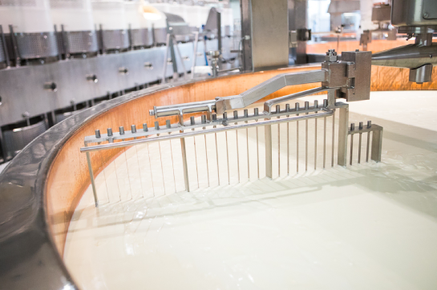
how the curd is cut
-
how much whey is removed
-
whether the curd is cooked
-
how the cheese is salted
-
which cultures are added
-
how the rind is managed
-
the temperature and humidity of the ageing room
-
how often the cheese is turned, washed or brushed
-
and how long it is matured
All of these can dramatically influence the finished cheese. Scientific reviews of cheese flavour consistently describe milk microbiology as only one of many factors involved in developing aroma, texture and flavour. So a pasteurised cheese made with carefully chosen cultures and matured for 18 months can be tremendously complex.
Why do cheesemakers choose pasteurised milk?
There are several reasons. One is food safety. Pasteurisation significantly reduces the population of potentially harmful microorganisms before cheesemaking begins. Another is consistency. Because the microbial environment is more controlled, cheesemakers can produce a cheese with greater predictability from batch to batch. That can be especially useful when milk is being collected from multiple farms or when a cheese is produced throughout the year. It also allows cheesemakers to select cultures specifically for the style of cheese they want to create. For some producers, that control is an advantage rather than a compromise.
Why do cheesemakers choose raw milk?
For some cheeses, raw milk is part of the tradition and identity of the product. Centuries-old cheesemaking methods developed long before pasteurisation existed. In these cheeses, the natural microbial community of the milk became intertwined with the traditional production process.
Some protected European cheeses therefore require raw milk as part of their production rules. Le Gruyère AOP, for example, is made from raw cow’s milk, while traditional production carefully controls every stage from milk collection through to maturation. The official Gruyère production process specifically notes that the milk is not heat-treated before curdling. For producers working in this way, raw milk can also be closely connected to the concept of terroir.
Cheese has terroir too
We normally associate terroir with wine. But the same idea can be applied to cheese.
The breed of animal, pasture, climate, season, farm environment and milk microbiology can all contribute to differences between cheeses. Raw milk can preserve more of the microbial community associated with that environment.
For traditional farmhouse cheeses, this can help express differences between farms, seasons or regions. But again, raw milk is not the only way to express place.
Milk composition itself — influenced by breed, feed and season — still matters greatly in pasteurised cheese. So does the local cheesemaking tradition and the ageing environment.
Does pasteurisation remove all bacteria?
No. Pasteurisation is designed to significantly reduce harmful microorganisms. It is not sterilisation. And once pasteurised milk enters the cheesemaking process, microorganisms are deliberately introduced through starter cultures.
Further microorganisms may establish themselves during ageing, particularly on cheeses with natural, bloomy or washed rinds. This is why even a pasteurised milk cheese can develop an incredibly active and diverse microbial ecosystem during maturation. The milk is only the beginning.
What about thermised milk?
There is actually another category you may occasionally encounter. Thermised milk is gently heat-treated at temperatures below full pasteurisation. It sits somewhere between raw and pasteurised milk in terms of heat treatment.
The aim is usually to reduce certain microorganisms while retaining more of the milk's original microbial character than conventional pasteurisation would. Thermisation is used in some European cheesemaking traditions, although the rules around terminology and production vary depending on the cheese and country.
So even “raw versus pasteurised” isn't always a completely black-and-white distinction.
Is raw milk cheese safe?
This requires a little context. Raw milk can contain pathogens capable of causing serious illness, which is why its production and use are regulated.
Making cheese introduces several additional factors that can help control microorganisms. Acidification, salt, moisture reduction, competition from beneficial cultures and ageing conditions all change the environment within the cheese. But these processes do not mean that every raw milk cheese is automatically safe.
Food safety depends on the entire production system, including animal health, milk quality, sanitation, manufacturing controls and the characteristics of the cheese itself. This is why approved raw milk cheeses are produced under specific regulatory and food-safety frameworks.
Does raw milk always make a stronger cheese?
No. You can find very delicate raw milk cheeses. You can also find extremely powerful pasteurised cheeses.
Think about a heavily washed-rind cheese made from pasteurised milk. Its rind organisms and maturation can create aromas and flavours far stronger than those of a mild raw milk cheese. The words raw milk tell you something about how the cheese began. They do not tell you exactly how the cheese will taste.
And does pasteurised mean mild?
Again, no. A pasteurised blue cheese can be intensely spicy. A long-aged pasteurised hard cheese can develop deeply savoury, nutty and caramelised flavours. A pasteurised washed rind can be pungent and meaty.
The cultures, moisture, salt, rind and ageing process can all have an enormous influence on flavour. This is why judging cheese purely by whether its milk was raw or pasteurised misses most of the story.
So which one is better?
Neither. They are simply two different approaches to cheesemaking.
Raw milk can allow the naturally occurring microbiology of the milk to play a larger role in the cheese. Pasteurisation gives the cheesemaker a more controlled starting point and reduces microbiological risk before production begins. Both approaches can produce cheeses that are: complex, simple, delicate, powerful, young, aged, traditional, modern — and exceptional.
What matters most is what the cheesemaker does with the milk they have.
Look beyond the label
The next time you see raw milk or pasteurised milk on a cheese label, think of it as one clue rather than a judgement of quality. Ask what animal produced the milk. Where was the cheese made? What cultures were used? How was the rind treated? How long was it aged? Who matured it? All of those decisions help shape the cheese in front of you. Because whether the milk began raw or pasteurised, truly great cheese is ultimately the result of good milk, skilled cheesemaking and careful maturation.