
Behind the Cheese: What Is Affinage?
3rd Sep 2026
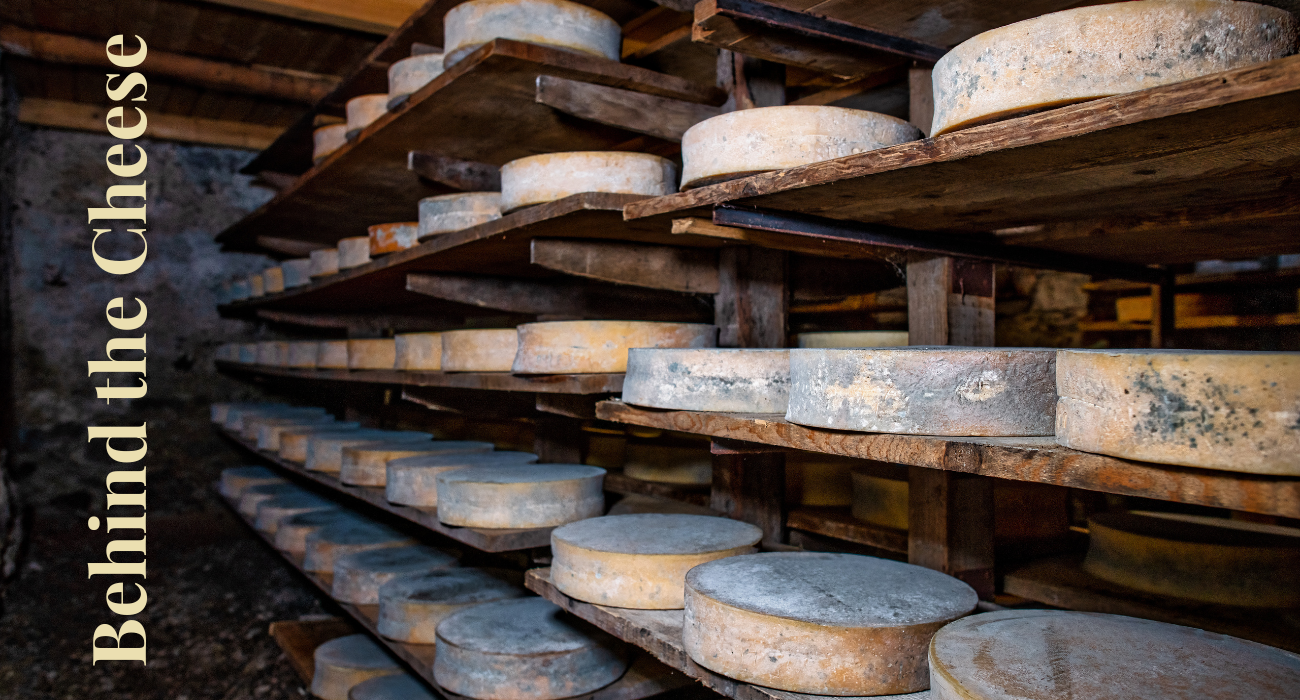
Making a cheese is only the beginning.
Once the curds have been formed, drained, salted and shaped, the cheese enters a stage that can be just as important as the cheesemaking itself: affinage.
Affinage is the French term used for the ageing or maturation of cheese. It is the period during which a young cheese develops its final texture, rind, aroma and flavour.
Depending on the cheese, this process might last only a few weeks — or continue for several years.
And despite what it may look like from the outside, ageing cheese is rarely a matter of simply placing it on a shelf and waiting.
So, what does an affineur actually do?
An affineur is someone who specialises in maturing cheese.
Their role is to create and manage the conditions that allow each cheese to develop properly. That can involve controlling temperature and humidity, turning wheels, brushing or washing rinds, monitoring mould growth and deciding when a cheese has reached the right stage of maturity.
Some cheesemakers carry out their own affinage from start to finish. In other cases, young cheeses are transferred to specialist ageing cellars where an affineur takes over the maturation process.
The relationship between cheesemaker and affineur can be a little like the relationship between a winemaker and a cellar master: the quality of the raw material is essential, but what happens during maturation can have an enormous influence on the finished product.
Why temperature and humidity matter
Cheese is alive with microbial activity.
During ageing, bacteria, yeasts and moulds continue to interact with the proteins, fats and sugars in the cheese. Temperature and humidity help determine how quickly — and in what way — these reactions take place.
Too dry, and a cheese may lose moisture too quickly, crack or develop an undesirable rind.
Too humid, and unwanted moulds or surface problems may develop.
Different styles therefore require very different environments. A firm mountain cheese can need conditions quite unlike those required for a delicate bloomy-rind cheese or a pungent washed rind.
Managing those conditions is one of the most important parts of affinage.
Why cheeses are turned
One of the simplest-looking jobs in the ageing room is also one of the most important.
Cheeses are regularly turned during maturation.
Turning helps moisture distribute more evenly through the cheese and prevents one side from remaining in constant contact with the shelf or matting beneath it.
It can also help the rind develop evenly and allows the affineur to inspect the cheese closely along the way.
For small cheeses, this might be done frequently. Large wheels destined for long ageing can continue to be turned throughout many months of maturation.
Brushing, washing and caring for the rind
The rind is not simply packaging.
It is an active part of the cheese and can play a major role in how it matures.
During affinage, some cheeses are brushed to remove excess mould or encourage a particular type of rind. Others are washed with brine, which creates conditions that favour specific surface bacteria.
Certain traditional cheeses may even be washed with wine, beer, cider or spirits.
These treatments change the microbial environment on the surface and can contribute enormously to a cheese's aroma and flavour.
That famous orange, slightly sticky rind found on many washed-rind cheeses is therefore not accidental — it is the result of careful management throughout maturation.
What is actually happening inside the cheese?
While the outside of a cheese may be brushed, washed and turned, equally important changes are happening inside.
Two of the major processes are known as proteolysis and lipolysis.
Proteolysis is the breakdown of proteins. As proteins are gradually broken into smaller compounds, the texture of a cheese can change dramatically.
This is one reason a young cheese that begins relatively firm can become softer, creamier or more supple as it matures.
Lipolysis is the breakdown of fats. This process contributes many of the aromatic and flavour compounds that give mature cheeses their complexity.
Together, these reactions help create flavours that can range from buttery and mushroomy to nutty, fruity, brothy, caramelised, earthy or intensely savoury.
Why some cheeses mature from the outside in
Not every cheese ripens in the same way.
Soft cheeses with active surface moulds or yeasts often mature from the rind towards the centre.
A young bloomy-rind cheese, for example, may have a relatively firm, chalky centre. As the microorganisms on the rind break down proteins, the paste immediately beneath the rind becomes softer and more fluid.
Over time, that softening gradually moves towards the middle.
This is why cutting into the same cheese at different stages of maturity can reveal completely different textures.
One week it might have a chalky heart.
A little later, it may be soft and creamy throughout.
What about long-aged cheeses?
Hard cheeses follow a different path.
As cheeses such as Parmigiano Reggiano, Comté or aged Gouda mature, moisture slowly decreases while proteins and fats continue breaking down.
Flavours become increasingly concentrated and complex.
Nutty, savoury, roasted and caramel-like notes can develop, and certain long-aged cheeses may form the crunchy crystals that many cheese lovers look for.
These crystals are a natural consequence of ageing and are often a sign of extensive maturation rather than anything being wrong with the cheese.
Does older always mean better?
Not necessarily.
Every cheese has a point at which its balance of flavour and texture is at its best.
For some soft cheeses, that window may be relatively short. Leave them too long and they can become excessively runny, ammoniated or overpowering.
Other cheeses are specifically made for extended ageing and may continue improving for many months or years.
An affineur's skill lies partly in recognising when a cheese is ready.
And that point can depend on how the cheese is intended to be eaten.
Some people love a soft cheese when it is still young, fresh and slightly chalky. Others prefer the same cheese much more mature, with a stronger aroma and softer texture.
There isn't always one single "perfect" stage.
Affinage is where personality develops
Milk, breed, pasture, starter cultures and the cheesemaker's technique all create the foundation of a cheese.
Affinage helps reveal what that foundation can become.
Two cheeses made from similar milk can develop completely different personalities depending on how they are aged, how their rinds are treated, the conditions of the cellar and how long they are allowed to mature.
That is part of what makes cheese so fascinating.
The wheel sitting quietly on a wooden shelf isn't simply getting older.
It is changing every day.
And somewhere along the way, a fresh wheel of curd becomes the cheese that finally arrives on your table.