
Behind the Cheese: Why Do Cheesemakers Keep Turning Cheese?
24th Sep 2026
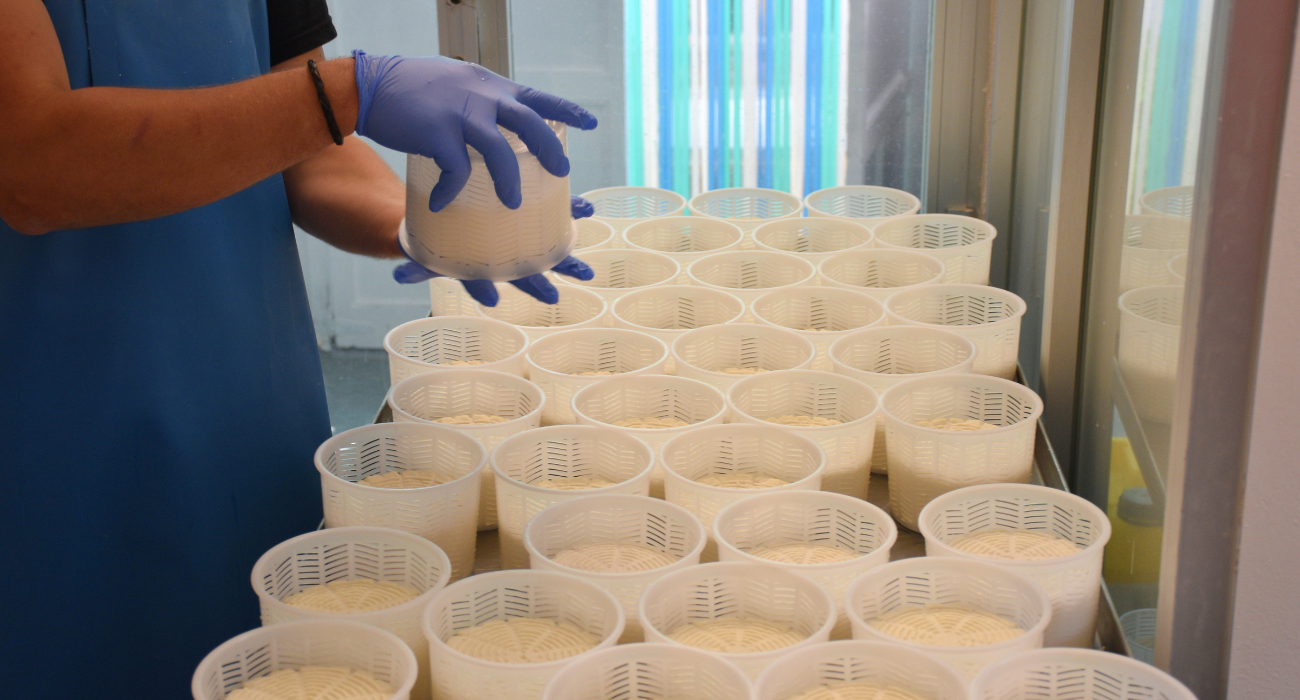
If you've ever visited a cheese ageing cellar, one of the first things you may notice is that the cheeses don't simply sit untouched on a shelf. They are turned. Again and again. Sometimes every day. Sometimes less often. Sometimes by hand, sometimes with the help of specialised equipment.
It sounds like a tiny part of the process, but turning can influence how evenly a cheese matures, how moisture moves through it, how its rind develops and even whether the cheese keeps its intended shape.
For cheeses that mature over many months — or even years — turning becomes part of a long routine of care. So why is it necessary? And what would happen if nobody bothered?
Cheese is still changing after it is made
A fresh wheel of cheese may look finished when it leaves the vat, but chemically and physically, it is still very much in transition.
During ageing, moisture continues to move. Proteins and fats continue breaking down. Rinds develop. Salt redistributes. Microorganisms on the surface and inside the paste continue affecting flavour and texture. At the same time, gravity is constantly acting on the cheese.
That matters because cheese is not a perfectly rigid object. Depending on its moisture level, size and structure, a wheel can slowly compress, flatten or change shape as it sits. Turning helps manage all of this.
First: gravity
One of the most obvious reasons to turn a cheese is also one of the simplest. Gravity pulls the weight of the cheese downward.
If a soft or semi-soft cheese were left in exactly the same position for too long, the lower side could gradually become compressed while the upper side remained under less pressure. Turning redistributes that pressure. This helps the cheese maintain a more even shape as it matures.
For softer cheeses, this can be particularly important during the early stages when the structure is still delicate. Without turning, some cheeses could begin to flatten, bulge or develop an uneven profile.
So yes — one reason cheesemakers keep flipping wheels is simply to stop gravity from having everything its own way.
Turning helps moisture distribute more evenly
Cheese contains a lot of water when it is first made. During ageing, some of that moisture gradually leaves the cheese. But moisture does not always move perfectly evenly.
The side sitting against a shelf, mat or board experiences a different environment from the side exposed to circulating air. If a cheese stayed in one position indefinitely, one surface could remain more humid while another dried more quickly. Turning regularly helps expose different surfaces to the surrounding air and ageing environment. This encourages more even drying and helps avoid excessive moisture building up on one side. That can have a significant impact on both rind development and the final texture of the cheese.
The contact surface matters
Think about what happens when a cheese is sitting on a wooden board. The underside is physically touching another surface. That affects airflow. It affects moisture. And it can affect which microorganisms are able to thrive there.
If the cheese remained untouched, the underside could become wetter, stickier or develop differently from the exposed surface. Turning changes which side is in contact with the shelf and which side is exposed.
That simple action helps give the rind a more consistent opportunity to develop around the entire cheese.
Turning and rind development
As we explored in Week 3, the rind of a cheese can be a living ecosystem. Moulds, yeasts and bacteria may all be involved in its development. Those microorganisms respond strongly to their environment. Moisture, salt, oxygen and surface contact all influence how they grow. Turning helps keep those conditions more balanced across the cheese.
For bloomy-rind cheeses, it can help encourage a more even coating. For natural-rind cheeses, it helps avoid a rind that is healthy on one side but excessively damp or poorly developed on another. For washed-rind cheeses, turning is often combined with brushing or washing so that the entire surface receives similar treatment.
Why washed-rind cheeses need particular attention
Washed-rind cheeses are a good example of why regular handling matters.
During ageing, the surface may be washed with brine or another liquid to encourage the development of particular yeasts and bacteria. If only the top and sides were treated while the base remained constantly pressed against the shelf, the rind could mature unevenly.
Turning lets the affineur inspect and treat the entire cheese. It also helps stop moisture from accumulating underneath. That matters because washed rinds are already relatively moist environments. Too much trapped moisture can make the surface excessively sticky or encourage undesirable growth.
So turning is not just about symmetry — it is part of managing the rind's microbial balance.
It also gives the affineur a chance to inspect the cheese
Turning is useful for another reason: It forces someone to actually look at the cheese.
Every time a wheel is handled, the cheesemaker or affineur gets an opportunity to check how it is progressing. Is the rind too dry? Too wet? Cracking? Developing unwanted mould? Softening too quickly? Losing too much moisture?
A small problem caught early can often be managed. A problem ignored for weeks can become much harder to fix. In that sense, turning is also a form of quality control.
Large cheeses are a different challenge
Turning a small goat cheese is one thing. Turning a wheel weighing 30 or 40 kilograms is another.
Large alpine-style cheeses such as Comté, Beaufort, Gruyère or similar cooked-curd wheels can spend many months in maturation. Throughout that time, they still need regular attention.
Historically, turning these wheels involved a considerable amount of physical labour. In many modern ageing cellars, mechanical systems assist with lifting and turning heavy cheeses, especially where thousands of wheels are being matured at once. But the principle is the same. The wheel is still being repositioned so that pressure, moisture and rind development remain as even as possible.
Does every cheese need to be turned the same amount?
No.
How often a cheese is turned depends on the style. A delicate young cheese may need frequent turning early in its life. A long-aged hard cheese may be turned on a different schedule. Some soft cheeses are turned daily during certain stages. Others are handled less often once the rind has stabilised.
There is no single rule. The cheesemaker or affineur adjusts the routine according to the cheese's size, moisture, rind type and stage of maturity.
Turning can affect shape
You may never think about this when looking at a perfect wheel on the counter, but shape is something cheesemakers actively maintain.
A round cheese can gradually become flatter if the weight is always resting on the same side. A soft cheese can slump. A taller cheese can become asymmetrical. Turning helps distribute compression and preserve the profile the cheesemaker intended. This matters not only visually. Shape affects the ratio of rind to paste, which in turn influences how a cheese matures.
A flatter cheese has more surface area relative to its volume than a large, thick wheel. That changes how quickly moisture can leave and how strongly surface-ripening microorganisms can influence the interior. So preserving shape is not simply cosmetic. It can affect the way the cheese ages.
What about blue cheese?
Blue cheeses can also be turned during maturation, but they bring another factor into play.
As we discussed previously, blue mould needs oxygen. Many blue cheeses are pierced to create channels that allow air into the interior. Turning can help maintain more consistent conditions around the wheel and keep moisture from collecting on one surface. Depending on the style, the cheesemaker may also be trying to balance rind development with the internal growth of blue mould. Again, the exact routine varies from cheese to cheese.
Can turning affect flavour?
Indirectly, yes.
Turning does not add flavour in the way salt, cultures or washing might. But by influencing moisture, rind development and the way the cheese matures, it helps create the conditions in which flavour develops properly. If a cheese dries unevenly, ripens unevenly or develops an unhealthy rind, the final flavour can suffer. So turning is one of those small actions that supports many other parts of the ageing process. It is maintenance rather than magic. But without it, the magic may not happen properly.
What would happen if nobody turned the cheese?
It depends on the cheese, but several things could go wrong.
One side might remain too damp. The rind could develop unevenly. The bottom could stick to the ageing surface. The wheel might flatten or distort. Moisture loss could become uneven. Surface flora could grow differently from one side to another. And in extreme cases, the cheese could develop faults that affect both texture and flavour.
Not every cheese would immediately collapse into disaster. But over weeks or months, the differences would become increasingly noticeable.
Turning is part of affinage, not a separate job
This is the important point.
Turning isn't a random cellar chore. It is part of the broader process of affinage.
The affineur is constantly managing the relationship between the cheese and its environment.
That may mean:
- turning
- brushing
- washing
- monitoring humidity
- moving cheeses between rooms
- adjusting temperature
- checking rind development
- deciding when the cheese is ready
Turning is just one part of that larger picture.
A surprisingly physical side of cheesemaking
There is something slightly romantic about ageing cellars filled with rows of beautiful wheels. But there is also a lot of repetitive physical work involved.
Cheese needs attention. And historically, that meant lifting and turning wheel after wheel, day after day. For large traditional cheeses, the physical effort involved in maturation could be significant. Modern equipment has made parts of that easier, but the underlying principle has not changed: good cheese needs to be looked after.
So next time you see a perfectly shaped wheel...
Remember that it probably did not simply sit quietly until it was ready.
It may have been turned dozens — or hundreds — of times. Each turn helping to balance moisture, maintain its shape, develop its rind and keep maturation moving evenly. It is one of the smallest gestures in the cheese cellar. But repeated over weeks, months or years, it becomes part of what makes the finished cheese what it is.