
Behind the Cheese: Why Are Cheeses Different Shapes?
1st Oct 2026
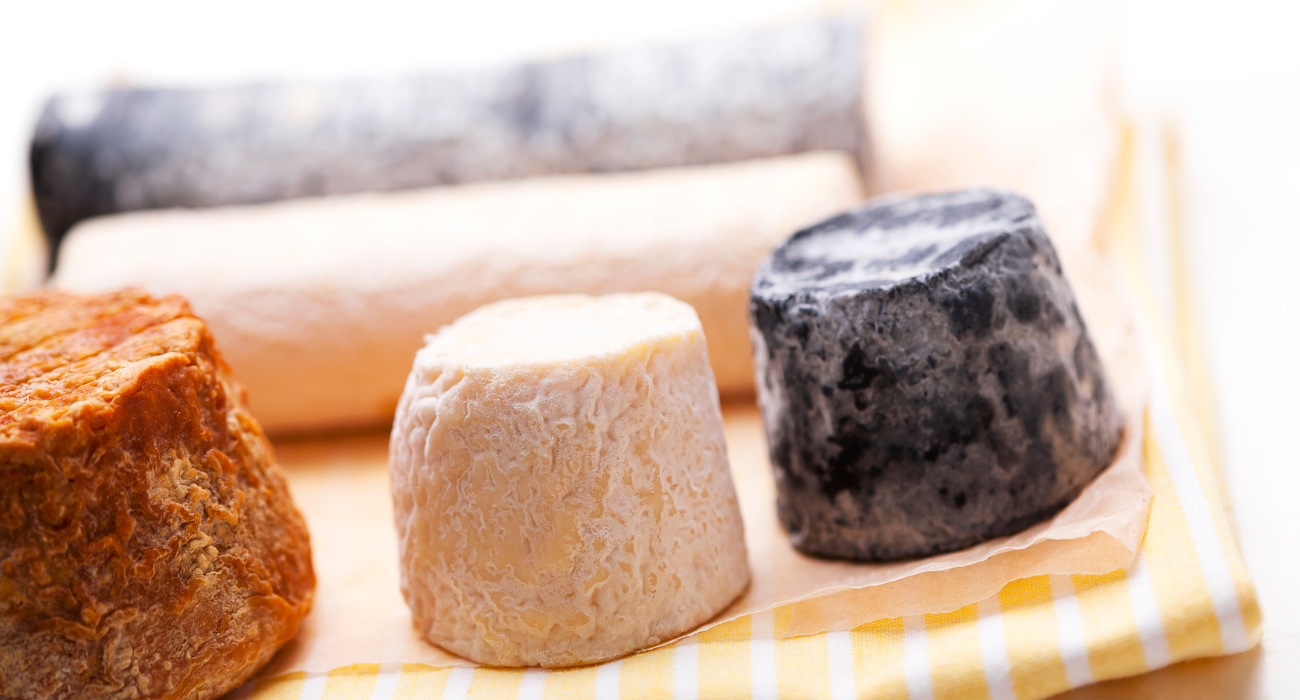
Walk along a cheese counter and you'll see wheels, drums, logs, pyramids, squares, cylinders and tiny rounds. At first glance, the shape of a cheese can seem mostly decorative — something created by tradition or simply to make one cheese look different from another. But cheese shapes are rarely accidental.
The size and shape of a cheese can influence how quickly it loses moisture, how its rind develops, how evenly it matures and even how its flavour and texture change over time. So why is Brie flat and wide, Comté enormous, and goat cheese so often shaped into small logs, rounds and pyramids?
The answer begins with the way cheese ages.
Shape changes the way cheese matures
As a cheese matures, there is constant interaction between the surface of the cheese and the environment around it. Moisture leaves the cheese through its surface. Oxygen reaches the rind. Moulds, yeasts and bacteria develop on the outside. Salt moves through the cheese, and enzymes gradually transform its texture and flavour.
This means one simple thing matters enormously: How much surface area does the cheese have compared with the amount of cheese inside it?
A small cheese has proportionally much more rind than a large cheese. That allows moisture to escape more quickly and means the activity taking place on the rind can influence the centre of the cheese much faster.
A very large wheel behaves differently. It has a relatively small surface area compared with the enormous amount of paste inside, allowing the cheese to retain more moisture and mature slowly over many months — sometimes years.
Why is Brie so flat?
Think of a wheel of Brie. It is broad, but relatively shallow. This shape creates a large surface area compared with the amount of cheese inside. That matters because Brie-style cheeses mature largely from the outside inward. The white rind develops on the surface, and enzymes produced by the rind gradually break down the paste underneath it.
As the cheese ripens, you may notice a softer, almost flowing layer directly beneath the rind while the centre remains firmer. Over time, that ripening moves toward the middle. If a Brie-style cheese were made extremely thick, the outside could become fully ripe long before the centre had matured properly. Its familiar flat shape helps the ripening process reach the centre more evenly.
Why are Alpine cheeses so enormous?
At the opposite end of the scale are cheeses such as Comté, Gruyère and Emmental. These cheeses can weigh tens of kilograms. Their enormous size is partly connected to their history.
In Alpine regions, milk from many animals was traditionally pooled together during the summer grazing season. Making one large cheese provided an effective way of preserving a large quantity of milk for months at a time. But size also influences maturation.
Large wheels lose moisture much more slowly than small cheeses. This makes them well suited to extended ageing. Over many months, their texture becomes firmer and more concentrated while complex savoury, nutty and roasted flavours gradually develop. A small cheese made from the same type of curd would behave very differently. It would dry much faster.
Why are so many goat cheeses small?
Traditional goat cheeses are often relatively small. You will see cylinders, buttons, logs, cones and pyramids. One reason is that many traditional goat cheeses contain a relatively high level of moisture when they are first made. A smaller shape allows that moisture to gradually escape while giving the cheese plenty of surface area for rind development. It also means changes on the rind can influence the centre relatively quickly.
This is why a young goat cheese may be soft, bright and fresh, while the same cheese can become firmer, denser and more intensely flavoured as it ages. With some cheeses, the rind may become wrinkled, dry or covered with natural moulds as moisture continues to leave the cheese. The shape helps control how quickly this transformation happens.
And what about the famous goat cheese pyramid?
One of the most recognisable cheese shapes is the truncated pyramid used for cheeses such as Valençay. There are plenty of colourful stories surrounding why certain traditional cheeses took on their particular shapes. Some are probably true. Others have become part of cheese folklore. But from a cheesemaking point of view, unusual shapes can also change how the cheese drains and matures. A pyramid, cone or tapered cheese has different thicknesses across the cheese, meaning moisture loss and ripening do not occur in exactly the same way as they would in a perfectly uniform cylinder. This contributes to the character of the finished cheese.
Why are some cheeses square?
Square cheeses such as Taleggio demonstrate that cheese doesn't always need to be round. Historically, square shapes could be practical. They fit efficiently on shelves, in crates and during transport. But shape also changes the relationship between the rind and paste.
A square cheese has corners and edges that can lose moisture differently from its centre surfaces. For washed-rind cheeses in particular, the affineur must carefully manage moisture, washing and turning so that the rind develops evenly across the entire cheese. Those corners therefore become part of the ageing challenge.
Why are wheels so common?
There is another very practical reason cheese wheels are everywhere. A wheel is easy to turn. As we explored last week, cheese is regularly turned during ageing. A round cheese can be rolled or rotated relatively easily, particularly when dealing with very large wheels. The shape also distributes pressure evenly. That becomes especially important with heavy cheeses that may spend months resting on wooden shelves.
And historically, before forklifts and modern handling equipment, being able to roll a huge wheel of cheese was considerably easier than trying to lift it.
The mould matters too
Before cheese even begins ageing, its shape is usually determined by the mould or form into which the curds are placed.
As whey drains away, the curds settle together and take the shape of that mould. The cheesemaker chooses the mould size and shape according to the style of cheese they want to create. That choice affects:
-
how quickly whey drains
-
how much moisture remains
-
how quickly the cheese cools
-
how salt moves through the cheese
-
how the rind develops
-
how quickly the cheese ages
So the mould is not simply a container.
It is part of the cheesemaking recipe.
Size can change flavour
Two cheeses made from almost identical milk and curd can develop differently simply because one is larger than the other. A smaller cheese generally loses moisture more quickly. Its flavours can become concentrated sooner and its rind can have a much greater influence on the paste. A larger cheese usually matures more slowly. That slower evolution can allow different flavours and textures to develop over a much longer period. This is one reason traditional cheese specifications can be remarkably precise about dimensions and weight. In many historic cheeses, the shape is part of the identity of the cheese itself.
Tradition matters too
Of course, not every cheese shape exists purely because of science. Cheese is also shaped by geography, farming practices, available equipment and centuries of tradition. A particular mould may have been used in one village for generations. A cheese may have been designed to fit onto certain cellar shelves or into particular wooden boxes. A large wheel may have made it easier to preserve a summer's milk. A small goat cheese may have suited the amount of milk produced by a household each day.
Over time, these practical decisions became traditions. And eventually those shapes became instantly recognisable signatures of particular cheeses.
Shape tells part of the story
So the next time you look at a cheese counter, pay attention to the shape. That enormous wheel, tiny button, flat disc or pyramid isn't simply a design choice.
It can tell you something about how the cheese was made, how quickly it will lose moisture, how its rind will develop and how long it may be intended to mature.
In cheese, even the shape has a job to do.