
Behind the Cheese: What Is That Mould Doing There?
17th Sep 2026
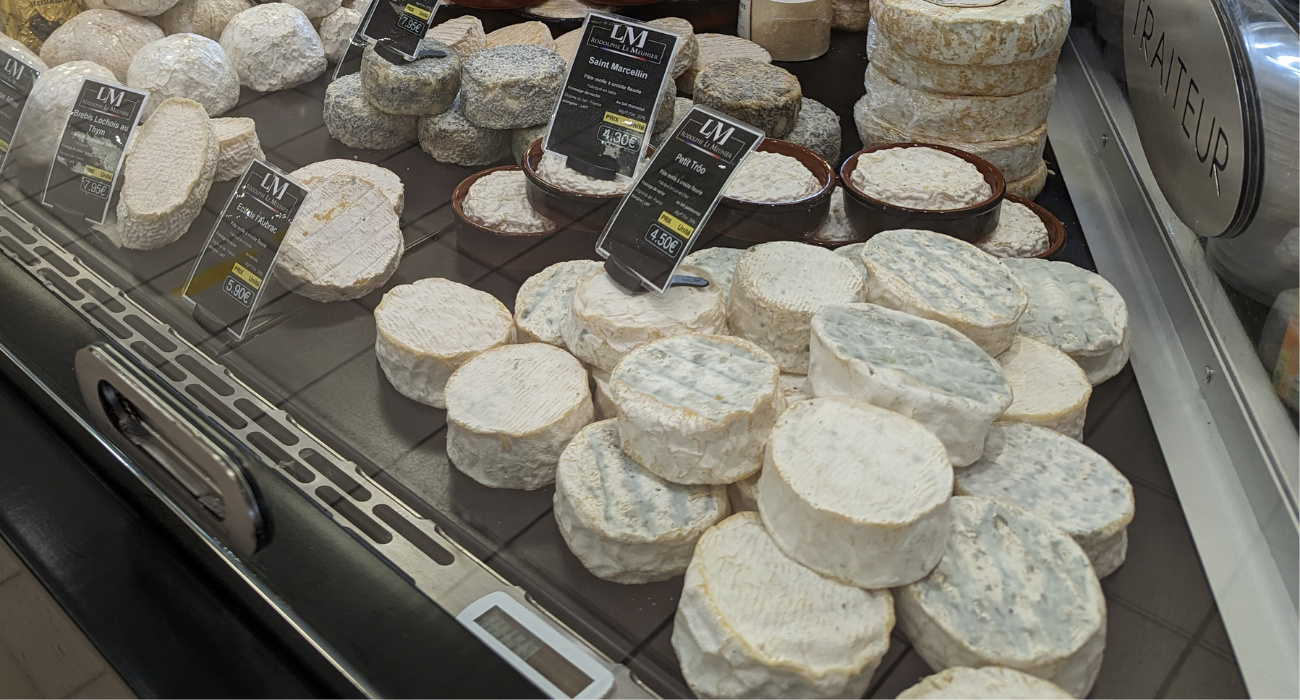
White, blue, grey, orange… sometimes even slightly furry.
If you opened your fridge and found some of those colours growing on most foods, you would probably be concerned. Cheese is different.
For many traditional cheeses, the microorganisms growing on the surface — and sometimes inside the cheese itself — are not an unwanted accident. They are an essential part of how the cheese matures.
Some are deliberately added by the cheesemaker. Others develop naturally in the ageing environment. Some soften the paste. Some create flavour. Some protect the surface. And some are responsible for the distinctive rind that tells you what style of cheese you are looking at before you have even cut into it.
But there is one important distinction to make from the beginning: Not everything colourful on a cheese rind is actually mould. Moulds, yeasts and bacteria can all be involved in cheese maturation, often working alongside one another.
So what exactly is growing on our cheese — and what is it doing there?
A cheese rind is an ecosystem
Once a cheese has been made, the work is far from finished.
As we explored in our piece on affinage, cheese continues to change throughout maturation. Temperature, humidity, salt, oxygen and the way the rind is treated all influence which microorganisms are able to thrive.
The surface of a cheese can become home to communities of moulds, yeasts and bacteria. And those microorganisms don't just change what the outside looks like. As they grow, they produce enzymes that break down proteins and fats within the cheese. Those reactions contribute to changes in aroma, flavour and texture. In some cheeses, the effects stay largely around the rind. In others, they gradually move towards the centre. And in blue cheese, mould is deliberately encouraged to grow inside the paste itself.
The white fluffy rind: Penicillium
Think of Brie or Camembert.
That soft, white coating is one of the most recognisable cheese rinds in the world. It is commonly associated with moulds such as Penicillium camemberti, also known in cheesemaking contexts as Penicillium candidum.
The mould grows across the outside of the young cheese, eventually creating its familiar snowy-white appearance. But the mould isn't there simply to make the cheese look pretty. As it develops, enzymes begin breaking down the proteins in the cheese. This helps explain something you may have noticed when cutting into a young Brie or Camembert. A younger cheese can have a soft layer immediately beneath the rind while still retaining a firmer, chalkier centre. Given more time, that ripening gradually progresses inwards.
Eventually, a cheese that began relatively firm can become soft, yielding and almost spoonable. The transformation is happening, quite literally, from the outside in.
That wrinkled goat's cheese rind
Not every white rind looks like Brie.
Some goat cheeses develop a thin, wrinkled surface that can look almost like the skin of a brain. One microorganism often involved here is Geotrichum candidum.
Technically, Geotrichum sits in an interesting area of cheese microbiology and is often described as a yeast-like fungus. Whatever terminology you use, cheesemakers value it enormously. It can help create the delicate, wrinkled rind found on many traditional goat cheeses and plays an important role in developing their aroma and texture. As the cheese matures, the flavour can move from fresh and lactic towards something deeper — sometimes mushroomy, nutty, earthy or increasingly savoury.
That slightly strange-looking rind is therefore doing quite a lot of work.
Blue cheese: putting mould inside on purpose
With blue cheese, the relationship with mould becomes even more obvious.
Moulds from the Penicillium roqueforti group are used in many blue cheeses. But there's a problem. The mould needs oxygen. And the interior of a compact wheel of cheese doesn't contain very much of it. That is why blue cheeses are pierced during maturation. Long needles create narrow channels through the cheese, allowing oxygen to enter. Once air reaches the interior, the blue mould can develop along cracks, openings and piercing channels. That is how the characteristic blue-green veins begin to appear. Those veins aren't simply visual.
The mould contributes substantially to the flavour of the finished cheese, helping create the peppery, earthy, savoury and sometimes almost metallic or spicy character associated with blue styles.
Different recipes, milk types, moisture levels and ageing methods mean the results can range from exceptionally creamy and gentle to crumbly, salty and intensely powerful.
What about grey or blue mould on the outside?
This is where cheese can start looking a little alarming if you're unfamiliar with traditional rinds.
Natural-rind cheeses are often allowed to develop a community of microorganisms on their surface during ageing. Depending on the cheese and the cellar, that rind may become mottled with grey, blue, white, brown or greenish tones. Rather than trying to create one perfectly uniform surface, the affineur may allow certain naturally occurring flora to establish themselves while regularly brushing, rubbing or turning the cheese.
The result can look considerably more rustic than the clean white rind of a Brie. Think of a traditional cellar-aged Tomme. Its rind might be rough, dusty, mottled and distinctly earthy-looking. That's part of the cheese.
In fact, these surface microorganisms can contribute to the earthy, cellar-like, mushroomy and savoury aromas we associate with many natural-rind cheeses.
And the orange stuff?
Here's where things get particularly interesting. That orange or reddish rind you see on cheeses such as Munster, Époisses, Taleggio or other washed-rind cheeses isn't necessarily mould at all.
Washed-rind cheeses develop a completely different surface environment. During maturation, the cheese may be regularly washed with brine — and, depending on the tradition, sometimes alcohol. That moist, salty environment encourages particular bacteria and yeasts to flourish.
Among the organisms historically associated with these surfaces are bacteria related to Brevibacterium linens, although real washed-rind ecosystems can contain a much broader mixture of microorganisms. They help create the characteristic orange, peach or reddish rind. And yes — they also contribute to that unmistakable washed-rind aroma.
Which brings us to an important cheese lesson: A powerful smell does not necessarily mean a powerful flavour. Some beautifully ripe washed-rind cheeses can smell dramatically stronger than they actually taste. Underneath that pungent rind, the paste may be buttery, creamy, meaty or surprisingly delicate.
Why do cheesemakers actually want microorganisms on the rind?
There are several reasons. The microbial community on the surface can:
Develop flavour
Microorganisms break down proteins and fats, creating new aromatic compounds as the cheese matures.
Change texture
In surface-ripened cheeses, this activity can soften the paste beneath the rind and gradually change the texture of the entire cheese.
Create the rind
The furry white coat of a Camembert, the wrinkled surface of a goat's cheese and the sticky orange rind of a Munster are all linked to microbial activity.
Influence moisture
The rind forms part of the boundary between the cheese and its environment, influencing how the cheese loses moisture as it ages.
Compete for space
A well-established rind community can occupy the cheese surface and help shape which other microorganisms are able to grow there.
The rind isn't simply a wrapper. It is part of the ageing process itself.
Is the mould added or does it arrive naturally?
Both can happen.
In modern cheesemaking, specific cultures may be deliberately introduced to create predictable results.
A cheesemaker making a bloomy-rind cheese, for example, may add selected mould cultures during production or apply them to the surface. Blue mould cultures are similarly introduced when making blue cheese. But traditional cheese maturation has also always relied on the environment.
Cellars, wooden shelves, equipment and the cheeses themselves can develop established microbial populations over time. This is one reason ageing environments can become such an important part of a cheese's identity. Two cheeses made from similar recipes can develop differently depending on where and how they are matured.
Why does the rind sometimes change colour?
Because cheese continues to evolve.
A young natural rind may begin pale and relatively clean before developing increasingly complex colours as it matures.
A goat cheese might begin snowy white, then gradually develop areas of blue or grey.
A washed rind might become deeper orange as its surface flora develop.
An aged wheel may acquire layers of dusty grey and brown.
Cheese isn't a static product. What you are looking at is one stage in an ongoing maturation process. And for traditional cheeses in particular, some variation from wheel to wheel is entirely normal.
Does mould on cheese always mean it's safe?
No.
There is an important difference between the intended microorganisms involved in making and maturing a cheese and unwanted mould appearing on food through spoilage.
This article is about the cultures and rind flora that belong to particular cheese styles. It doesn't mean that every mould growing on every piece of cheese should automatically be eaten. Knowing the cheese matters.
A blue vein running through Roquefort is supposed to be there. The white rind surrounding a Camembert is supposed to be there. A naturally mottled rind on a traditionally matured Tomme may be exactly what the affineur intended. Unexpected growth on a cheese that normally shouldn't have it is a different situation.
If you're ever unsure about a cheese you've bought from us, ask.
We would much rather have you send us a photo than throw away a perfectly good piece of cheese because its rind looked unfamiliar.
Should you eat the rind?
Sometimes yes. Sometimes no. And sometimes it simply comes down to personal preference.
Many bloomy, washed and natural rinds are edible and form part of the intended flavour of the cheese. A piece of Brie eaten with its rind tastes different from a spoonful of the paste alone. Likewise, the rind of a washed cheese can provide a far more intense savoury flavour than its centre. But edible doesn't necessarily mean everyone will enjoy it.
Some rinds become particularly strong, earthy, bitter or ammoniated as they mature. Other cheeses may have coatings or treatments that aren't intended to be eaten. When in doubt, ask your cheesemonger.
So next time you see a slightly furry cheese…
Don't immediately panic.
That white bloom, blue vein, wrinkled surface or rustic grey rind may be one of the most important parts of the entire cheese. The microorganisms growing there can be responsible for softening the paste, developing aromas, creating flavour and transforming a fairly simple young cheese into something far more complex.
It might look a little wild. But in the world of cheese, sometimes the things growing on it are exactly what make it extraordinary.