
Mythbusters: Cheese & Wine Edition Week 3 - Blue cheese needs a big red
20th Aug 2026
Why Your Blue Cheese Wants Sweetness, Not a Big Red
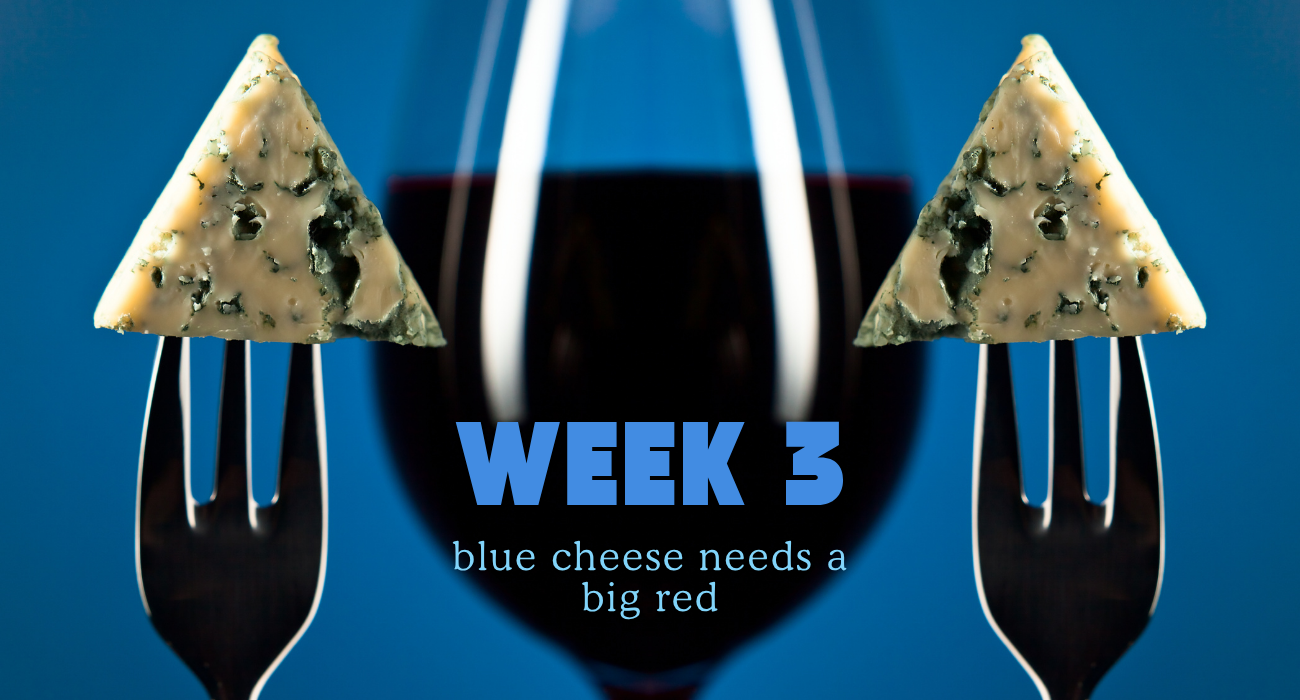
If there's one pairing instinct that seems almost universal, it's this: blue cheese is intense, so it must need an equally intense red wine to match it. It feels logical. It's also one of the most reliably wrong pairings you can make.
Where the myth comes from
Blue cheese is bold — sharp, salty, pungent, sometimes downright aggressive in flavour. It's natural to assume it needs a wine with real weight and structure to avoid being overpowered, and big reds like Shiraz or Cabernet Sauvignon are the wines most people associate with "power."
Why it doesn't work
The issue is the same one that runs through this whole myth-busting series: tannin and salt are a bad combination. Tannin already tends to taste more bitter and astringent in the presence of salt, and blue cheese is one of the saltiest cheese styles there is. Add in blue cheese's characteristic sharp, peppery bite from its mould cultures, and a big tannic red doesn't complement the cheese — it amplifies everything unpleasant about the pairing while suppressing the cheese's more delicate, creamy undertones.
What actually works
Sweetness is the key. A wine with real residual sugar balances blue cheese's saltiness the same way honey balances a strong cheese, or the way a sweet chutney works alongside a sharp cheddar. This is why Roquefort and Sauternes is considered one of the great classic pairings in all of food and wine — it's not a novelty, it's genuinely one of the most reliable, well-tested combinations that exists. Port works on the same principle: its sweetness and fortified richness stand up to Stilton's intensity without needing tannin to do the heavy lifting.
Three pairings to try this week
- Roquefort + Sauternes — This French classic pairs Roquefort's sharp, salty intensity with Sauternes' honeyed sweetness and racing acidity, creating one of the most balanced pairings in the cheese world.
- Shropshire + Tawny Port — A British institution for good reason: Port's dried-fruit sweetness and nutty warmth soften Shropshire's sharp edges beautifully.
- Gorgonzola Dolce + late-harvest Riesling or late-harvest Viognier — The milder, creamier Dolce style pairs with a lighter sweet wine, letting the cheese's buttery richness come through without being overwhelmed.
The takeaway
Next time you reach for a big red to go with your blue cheese, try reaching for something sweet instead. It's counterintuitive, but it's the pairing that professionals reach for again and again — and once you try it, you'll understand why.